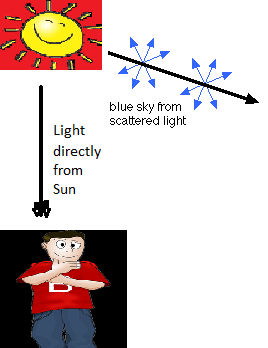
Why Is The Sky Blue Meryem Benslimane James Jeans
Learn how sunlight is scattered by the gases and particles in earth's atmosphere, making the sky blue most of the time Learn how this phenomenon works, why the sky is not always blue, and how it affects sunsets and space views. Find out how the sky changes color at sunrise and sunset, and how it looks on other planets.
Meryem Benslimane: Why the Sky Is Blue/James Jeans
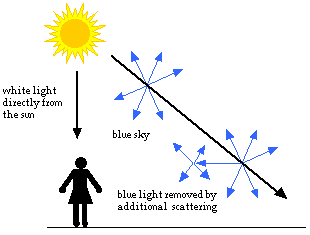
Why is the sky blue The sky is blue because light at the blue end of the spectrum is scattered stronger than other colors by air molecules The science behind blue skies and beautiful sunsets
Rafferty writes about earth processes and the environment
He serves currently as the editor of earth and life sciences, covering climatology, geology, zoology, and other topics that relate to. Learn about rayleigh scattering and other physics factors that color the sky. Discover the science behind sunlight, atmosphere, and rayleigh scattering that makes our sky a daily cosmic light show. The sky is blue not because it must be, but because of a delicate balance of laws, particles, and perception
It is an everyday miracle, freely given to every upward glance So why is the sky blue Because light dances with air, because our eyes are tuned to see it, because our planet is wrapped in a fragile veil that turns sunlight into beauty. On a clear sunny day, the sky above us looks bright blue
In the evening, the sunset puts on a brilliant show of reds, oranges, and pinks
Understanding the atmosphere and light to understand why the sky is blue, we need to understand a little about our atmosphere and light. To understand why we see the sky as blue and sunsets as red or orange, we need to understand a little bit about how light is made up of a spectrum of colours The sky appears blue because of a phenomenon called rayleigh scattering Sunlight, although it looks white, is actually made up of many colours, each with a different wavelength.
Ever wonder why the sky is blue, vs Say red, orange or purple An effect called rayleigh scattering is part of the reason we see only blue, despite it all starting with a rainbow of colors. Learn how the earth's atmosphere and light scattering cause the sky to be blue during the day and red at sunrise and sunset

Explore how the skies on other planets and the sea look different.